
Sometimes You Just Have to Drop the Bass
by Larry Craft II
It is often said in Nashville that F# is the new G.
This may be true for some, but sometimes on my bass, G is still G. What do you do when you need both? You could move your hand down a half step, but then eventually you run out of low notes. You could play a 5 string, but that might not work for your traditional Country gig. You can tune a bass BEAD but you’ve just been informed the new key is Bb. You could bring another bass tuned down a half step, but the set moves too quickly to make a change when you need to (or the artist calls an audible). I have an idea! It seems the guitar player has this new sweet drop pedal. Let me try that. It sounds great on guitar, but on bass I am left thinking where did all my attack and definition go? Back to square one.

These may sound ridiculous, but these are all situations I’ve experienced firsthand. In a live set, typically the bass is always playing in some capacity. No matter my needs or wants in those transitions between songs, for me, tuning always wins. Sets aren’t always stacked for guitar changes and if you don’t have a crew to help you change basses, you can be scrambling to make it to your downbeat. I have deliberated this issue with the ‘easy’ fix to carry 2 basses for the set. It was also hard because when the show gets rolling, I don’t really like to (or have time to) switch basses. It’s nice when you can settle in and only have to worry about your musical parts.
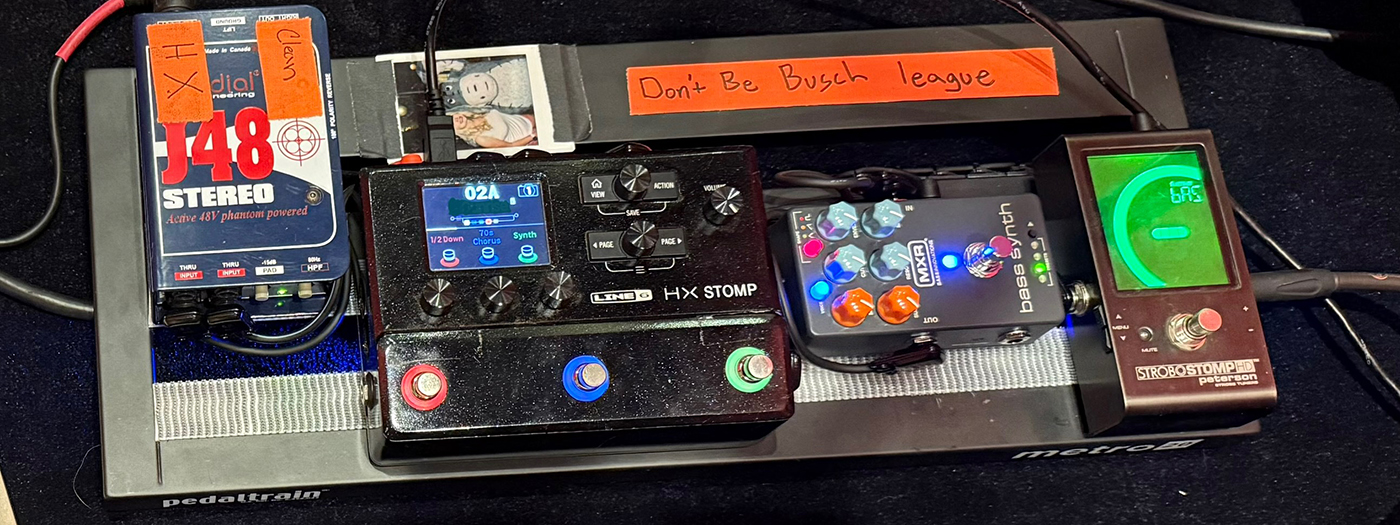
One day we arrived at a show early and I had some time to mess around with my pedal board. Yes, bass players can have pedal boards too! On my board I have a Line 6 HX Stomp which is a great tool to have. Assuming the role of mad scientist, I tried several different options for my tuning/detuning predicament, then I remembered a guitar player friend of mine who has a whammy pedal. Now, before you roll your eyes because a bass player is talking about a whammy pedal, let me explain. We all know how they can be used to get big sweeping dive guitar sounds, which is technically pitch shifting. I then had a eurekamoment. I took my HX and plugged into a tuner. Then I opened HX Edit and pulled up the whammy pedal. I proceeded to tune the whammy pedal to Eb. Immediately, there was a difference over other detuning options. My bass still sounded like a bass! It sounded good on its own, but it needed a field test. During the show that night, we got to the song in the set where I needed a low Bb. Sure enough it worked! I was so happy.
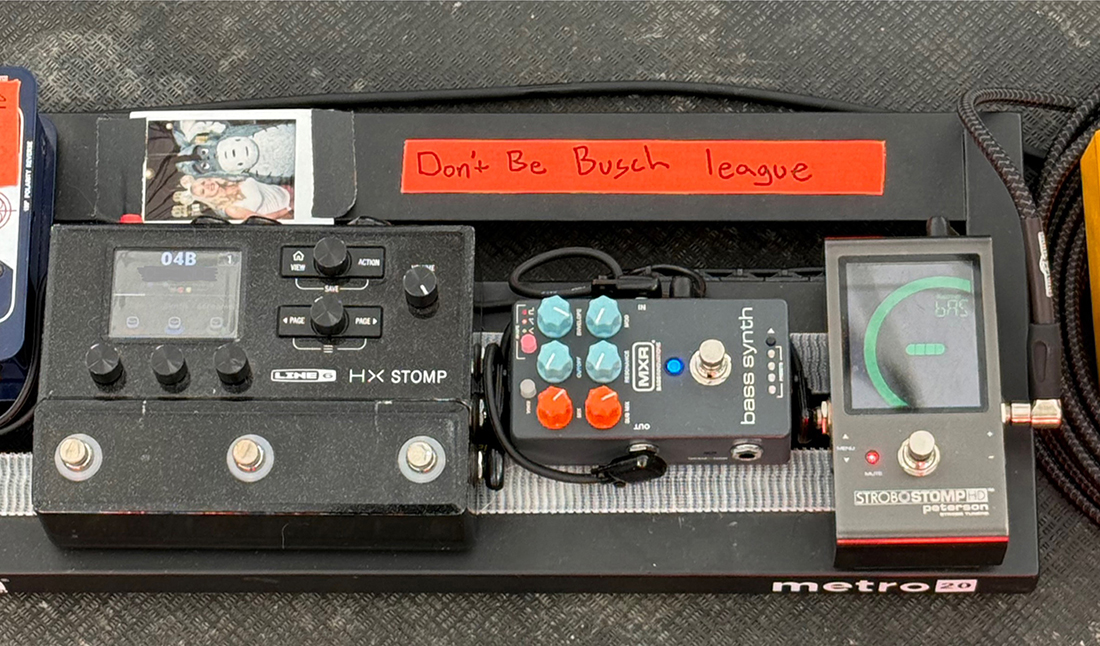
After that I was mentioning it to some of my fellow bass players around town and they asked to try it. Everyone loved the approach. It solved so many issues for them, like sets tuned down a half step or only being able to fly with one bass. To make matters even better, some guitar players wanted to try the patch and have approved.
So next time you’re in a similar predicament or just someone who may only have one bass, I hope this simple fix can help you. We all have our own ways of getting to the finish line, and I hope this can help you enjoy your race.

Larry Craft II is Nashville based touring and session bass player. Originally born near Detroit MI he’s been playing since he was 14. After moving to Nashville in 2012 he’s had the pleasure of working with many great artist and musicians. Th HX stomp is a great tool for any working Musician.



Leave a Reply
You must be logged in to post a comment.