
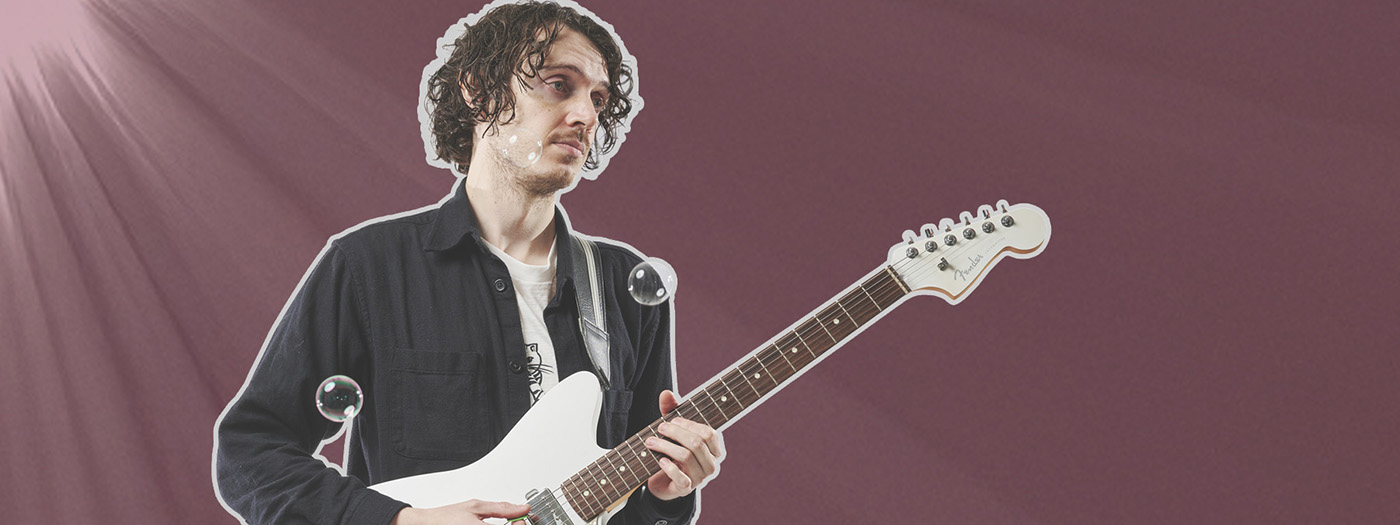
Why The HX Stomp is the Ultimate Pedalboard Enhancer
by Michael Astley-Brown
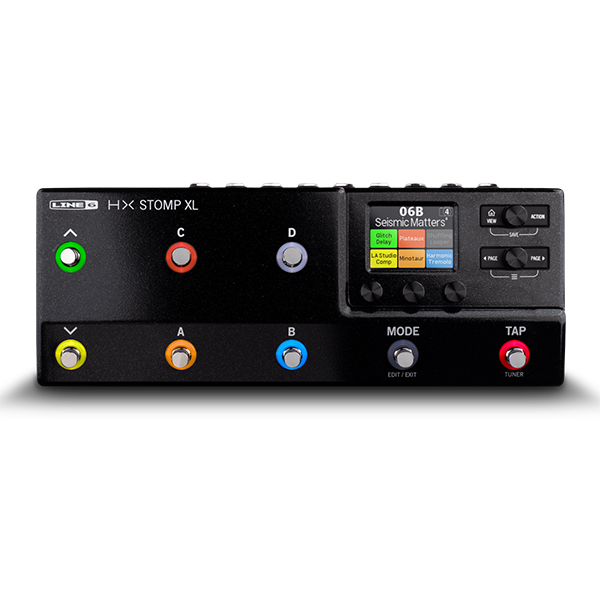
Most guitarists know the HX Stomp as an amazing amp modeler and multi-effects unit. But I don’t use any amp models. I don’t even use that many of its effects. Yet I still consider the HX Stomp XL the centerpiece of my rig, and I thought it would be interesting to explore how that became the case.
It started with a quest for the ultimate pedal to fill in the gaps. Something that could cover all the occasional effects – the chorus, the flanger, the reverse reverb. The stuff that crops up for one section in one song in the set, but you don’t want to waste valuable ’board real estate on a standalone stomp.
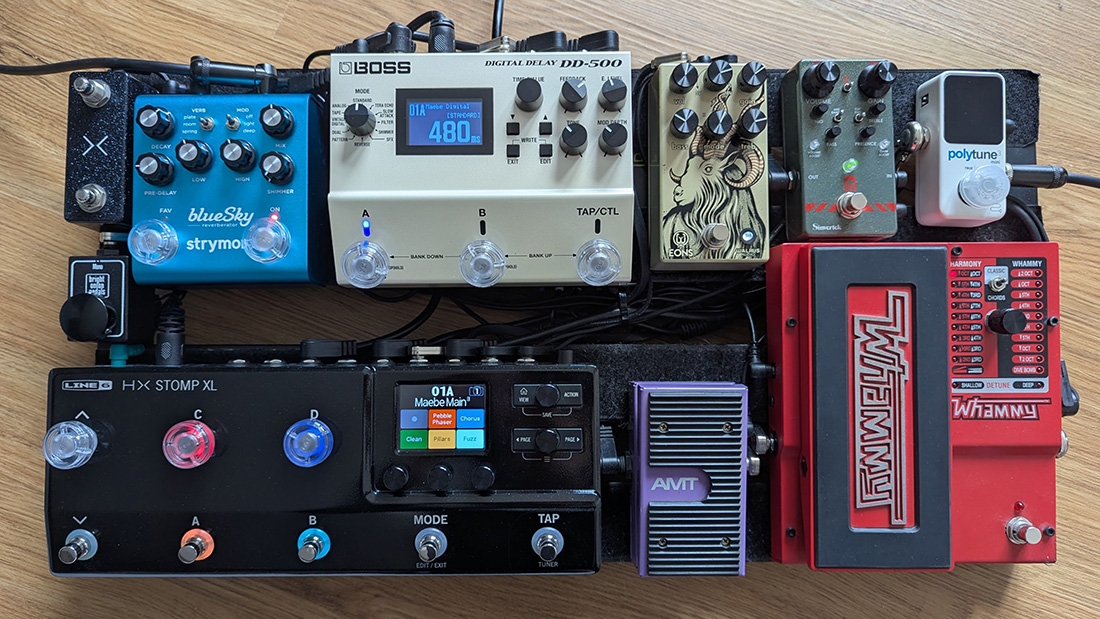
I’d already settled on drive and fuzz pedals and a clean amp I love many moons ago. I wanted something to complement that setup rather than replace it.
But the HX Stomp’s role in my rig quickly evolved when I realized it could help me get more out of my real-life drive pedals. Using both HX effects loop blocks for drive and fuzz, I now had full control over the input and output volumes going to and from the pedals.
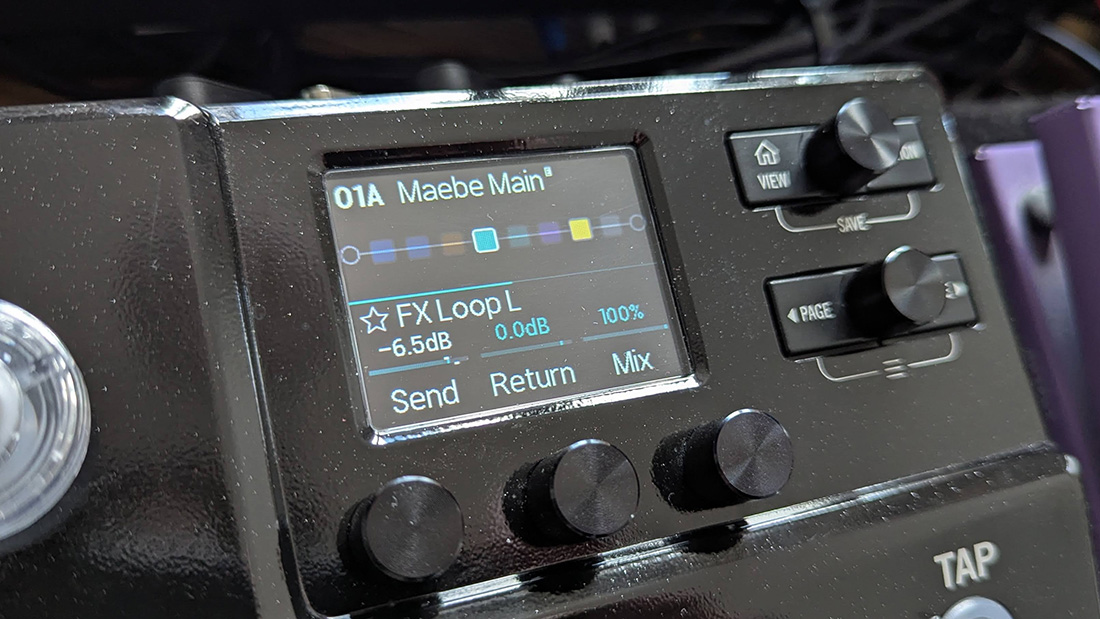
This is a useful hack to boost and cut the amount of gain coming from a pedal without using an extra block. My ‘clean’ sound is just a 6.5dB input level drop on my main drive, the Sinvertek Drive N5, which reduces the level of dirt without changing the character. It gives me a consistent tonal center, which is important in my melodic math-rock band Maebe, where there are three guitarists all fighting for their spot in the mix. You can use the effects loop blocks to incorporate volume boosts, too, and easily compensate input signals for different guitars’ output levels.
Once I cottoned on to the potential of the HX ecosystem, I took the plunge on the HX Stomp XL. That meant more footswitches, more potential, and it finally forced me to get my head around its MIDI capabilities. I’d always been terrified of MIDI – I’m a words guy, not a numbers nerd. But HX made it easy.
The key to unlocking the HX’s MIDI potential is the Command Center. Every footswitch can be assigned a MIDI function alongside its usual switching tasks. Six instant MIDI changes can also be set up per snapshot, which was an absolute game-changer for me.
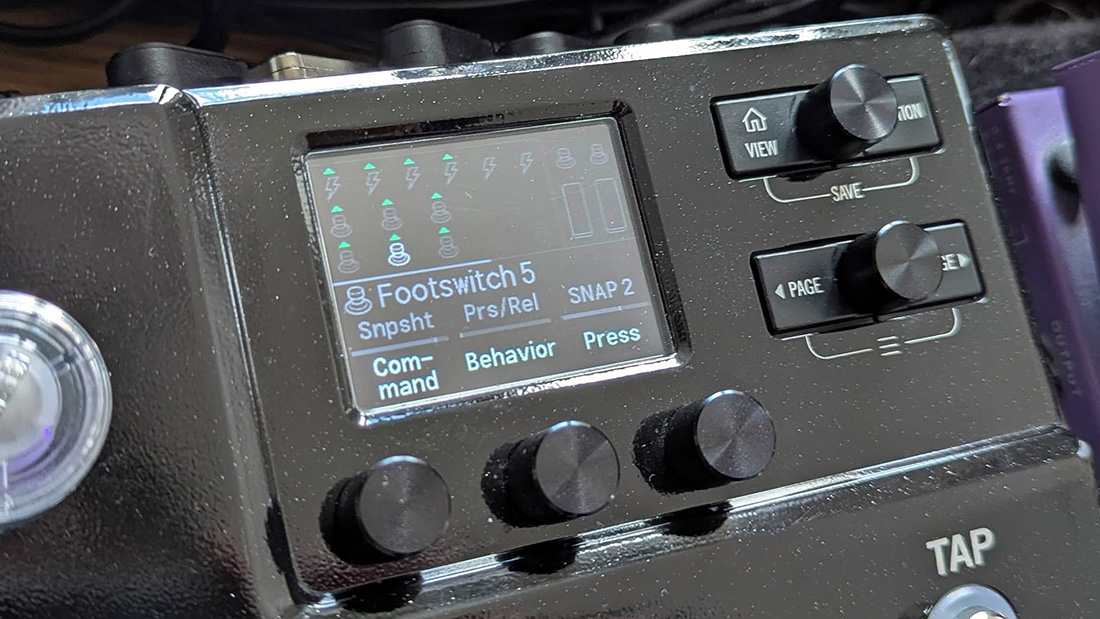
I use the HX Stomp to change my Boss DD-500 delay patches, to activate my Strymon BlueSky reverb and change settings on my DigiTech Whammy. It means every section of every song is dialed in exactly how I need it, using the real-world effects pedals I consider integral to my voice on the instrument, while mixing in the HX’s own awe-inspiring modulation sounds.
Combined with the effects loops, I can now go from my most Earth-shattering lead tone, slathered in modulation and delay, to a bone-dry clean with the push of a footswitch.
Using the HX Stomp XL as the central control station for my rig has made me a better live performer, too. Being tethered to my pedalboard and hitting three or four pedals every time I switched sections prevented me from roaming the stage and interacting with the crowd. Now I can hit one switch and go throw some shapes.
It’s also saved me bringing an extra guitar to every show. In Maebe, we have a bunch of songs that use B-to-B baritone tuning. But the HX Stomp’s Poly Capo is so effective, I’ve been leaving the bari at home.
The HX Stomp XL is also an amazing tone-shaping tool. I use the LA Studio Comp at the end of every effects chain to give a little extra squishiness to the feel and gel all my sounds together. It’s hardly noticeable, but it just smooths everything out in a pro, mix-ready way. I can’t live without it now. When I first bought the HX Stomp, I never imagined it would become the most important pedal in my guitar rig. The flexibility it has afforded me as a guitarist has simplified my setup, honed my tone and made me more confident in my live performances. No matter how many times I change up the rest of my rig, the HX Stomp evolves with it and makes it better. It doesn’t set out to replace my pedalboard; it enhances it.
Check out Maebe’s new album, Brain Paint, here.

Michael Astley-Brown is Editor-in-Chief of GuitarWorld.com and plays in UK math-rock outfit Maebe. He has written and edited for MusicRadar, Total Guitar and Guitarist, and interviewed everyone from John Frusciante to Chris Cornell. He has a thing for high-performance offset guitars and is trying to curb his stompbox habit (the HX Stomp helps)..



Leave a Reply
You must be logged in to post a comment.